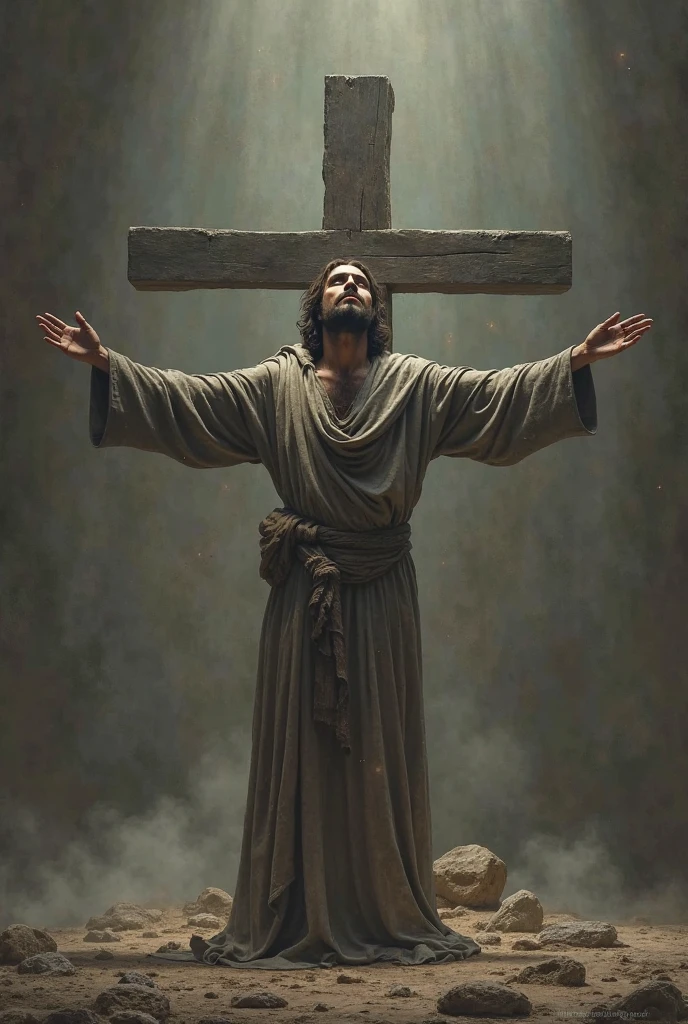
Adam’s story reveals humanity’s fragile nature—formed from dust yet filled with God’s breath—while the serpent’s deception unveils the roots of sin and death.
When we open the Bible, the first man we encounter is Adam . His very name in Hebrew
means “man.” Adam is not only the first human being but also a mirror of all humanity.
His story is not simply his own; it is our story too.
Scripture tells us:
“Then the Lord God formed man of dust from the ground, and breathed into his nostrils
the breath of life; and man became a living being.”
— Genesis 2:7, RSV
Here already lies a great mystery. Man is made of dust and breath. Dust speaks of our
weakness, our fragility, and our end. Breath speaks of God’s gift, His Spirit placed within
us. Dust returns to the earth, but the breath belongs to God. In Adam, we see the tension
of our lives: weak as clay, yet carrying the breath of eternity.
Adam was placed in a garden of delight — Eden — where he walked in fellowship with
God. He was entrusted with work: the care of creation, and the joy of naming the
creatures. Yet he was also given a command, a holy boundary: not to eat from the tree of
the knowledge of good and evil . This command was not a burden but a test of love and
obedience.
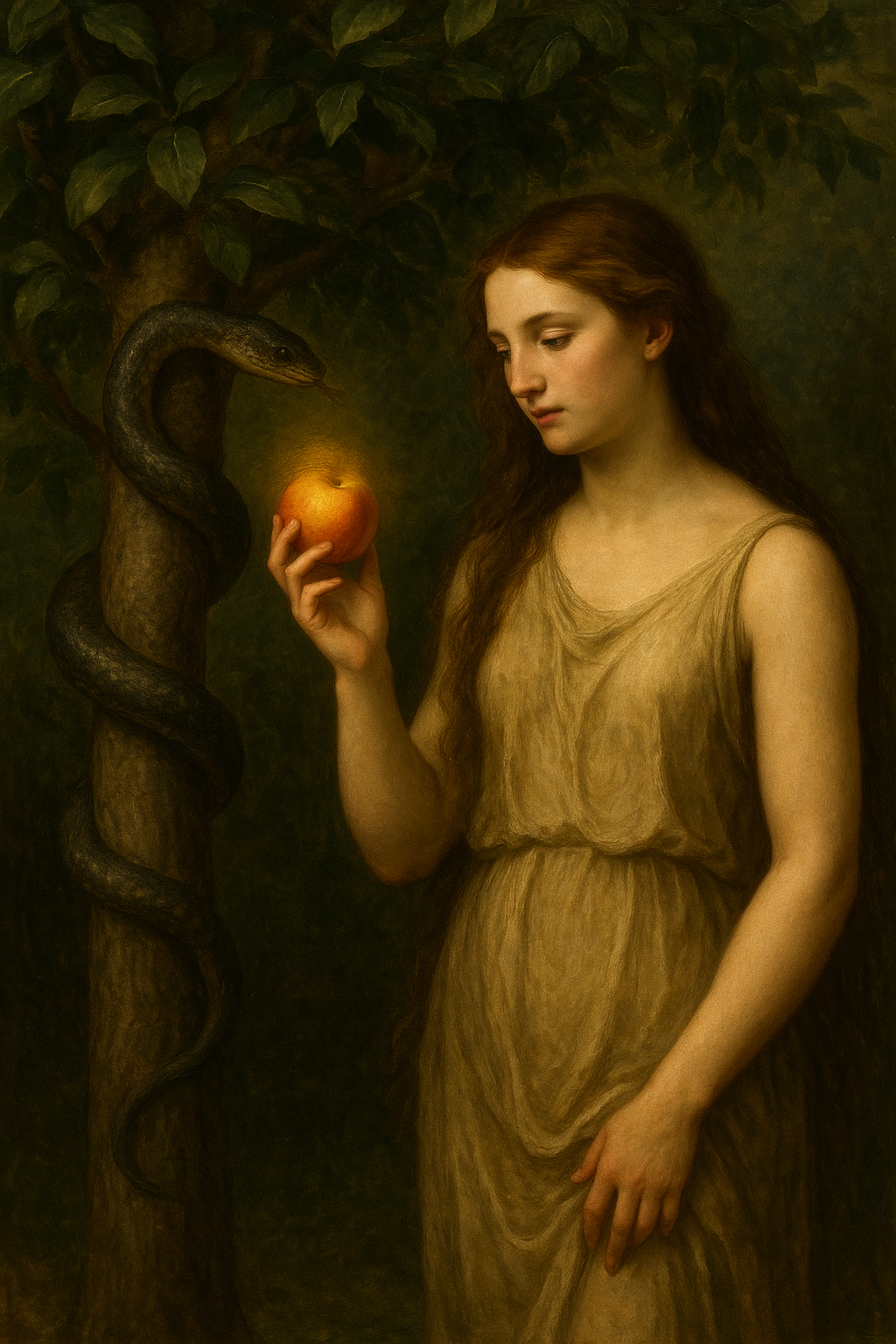
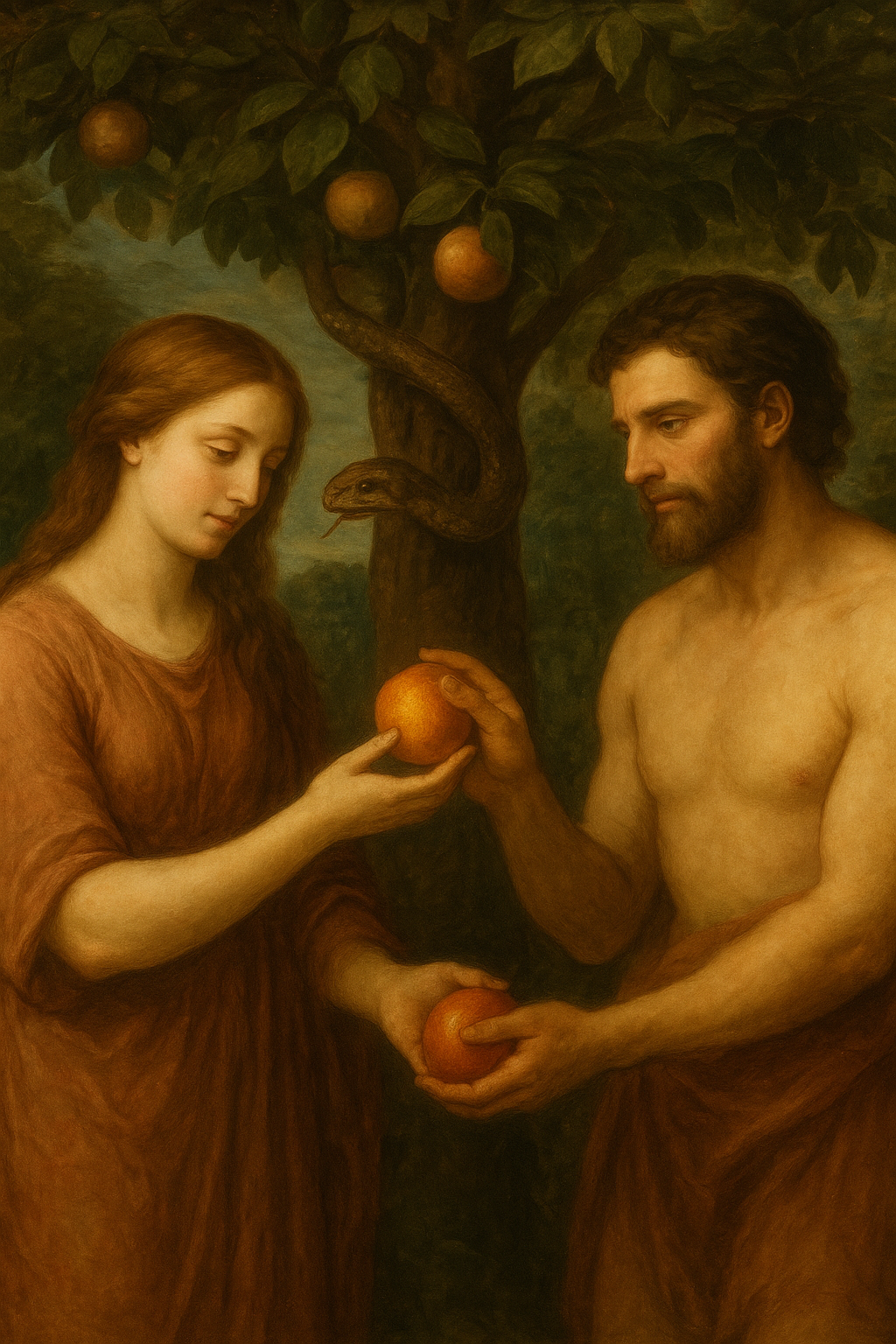
But when the serpent came, deception entered. Eve listened, Adam followed, and the first
disobedience opened the door for death. The Scriptures declare:
“Therefore as sin came into the world through one man and death through sin, and so
death spread to all men because all men sinned.”— Romans 5:12, RSV
The Snake as Symbol
The serpent in Eden is more than an animal. It is a symbol that carries deep spiritual
meaning:
Deceiver / Satan
The serpent represents Satan, later revealed in Revelation as “that ancient serpent, who is
called the Devil and Satan” (Revelation 12:9). His greatest weapon is deception — twisting God’s words, sowing doubt, and offering
half-truths that sound attractive but lead to ruin.
Subtlety & Manipulation
The serpent is described as “more crafty than any other beast” (Genesis 3:1).
This shows the nature of temptation: it often appears harmless, logical, or even good at
first, while hiding its poison.
Rebellion Against God’s Order
Notice the serpent spoke first to Eve, not to Adam.
This is not a sign of Eve’s weakness, but of Satan’s rebellion. He attacked God’s design
by disrupting order, sowing division, and undermining trust.
Rebellion Against God’s Order
Eve was deceived. As Paul later wrote: “Adam was not deceived, but the woman was
deceived and became a transgressor” (1 Timothy 2:14). She believed the serpent’s lie —
that the fruit would give her wisdom like God
Adam was not deceived. He chose knowingly. Out of love for Eve, or out of rebellion
against God, he preferred unity with her over obedience to the Creator
Symbolism: Humanity fell through a double wound — the deception of the heart, and the
willful rebellion of the will.
Deeper Symbolism
The Fruit = Autonomy from God
The temptation was never about food. It was about independence: being like God without
God.
It represents the root of all sin — pride, self-rule, and the refusal to remain under the
Creator’s authority.
Eyes Opened = False Enlightenment
After eating, their eyes were opened — but not to glory, only to shame. This symbolizes the counterfeit ―wisdom‖ of sin. It promises freedom but delivers
bondage, promising light but plunging into darkness.
The Snake Crawling = Fallen Power
God cursed the serpent to crawl and eat dust (Genesis 3:14).
This symbolizes Satan’s ultimate humiliation. Once exalted, he is cast down, defeated,
and destined for destruction.
Through Adam, sin and death entered the world. His fall was not only his; it became
ours. His weakness is the weakness of all mankind. His disobedience reflects our own
hearts. His death is the death we all inherit.In Adam, all die .
And yet, even in this fall, God whispered a promise. To the serpent He declared:
“I will put enmity between you and the woman, and between your seed and her seed; he
shall bruise your head, and you shall bruise his heel.”— Genesis 3:15, RSV
This is the first prophecy of Christ — the Seed of the woman who would one day crush
the serpent’s head. Even as judgment was spoken, redemption was promised.
The Fathers of the Church
The early Church Fathers looked at Adam not merely as history, but as prophecy. In him,
they saw a foreshadowing of Christ.
Augustine (4th century) taught that Eve, taken from Adam’s rib, symbolized the Church
taken from Christ’s side. Just as Eve was built from Adam’s rib, the Church is built from
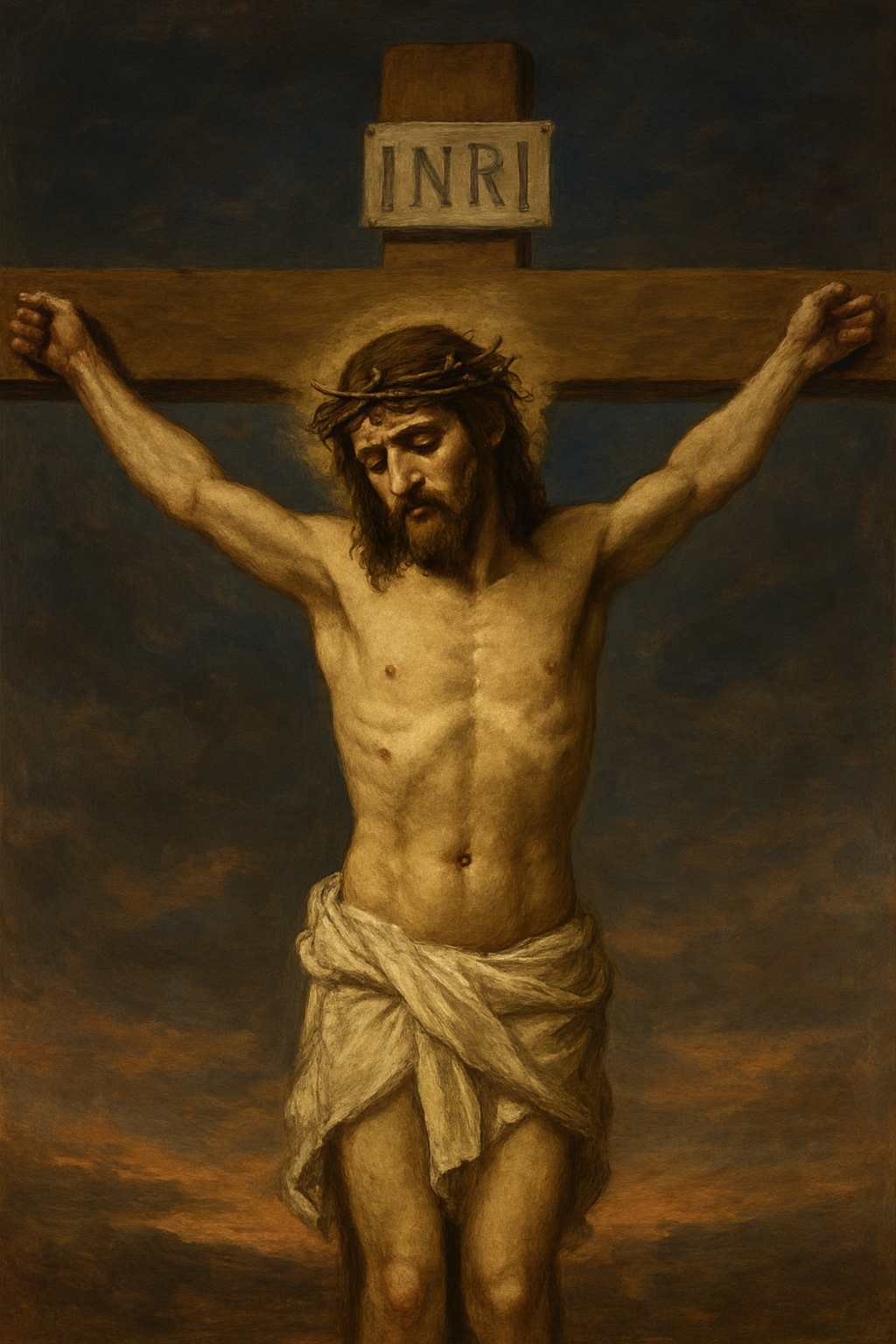
Christ’s sacrifice. When Christ’s side was pierced on the cross, blood and water flowed
— signs of baptism and communion, by which the Church is given life.
Tertullian (2nd century) drew the parallel even more clearly: Adam’s deep sleep
foreshadowed Christ’s death; Adam’s side being opened pointed to Christ’s pierced side;
and Eve’s creation symbolized the birth of the Church. In Adam’s sleep, the bride was
formed. In Christ’s death, His Bride, the Church, was born.
Adam is therefore more than history. He is a living symbol. He reveals both the greatness
of man — made in God’s image — and the tragedy of man, fallen through disobedience.
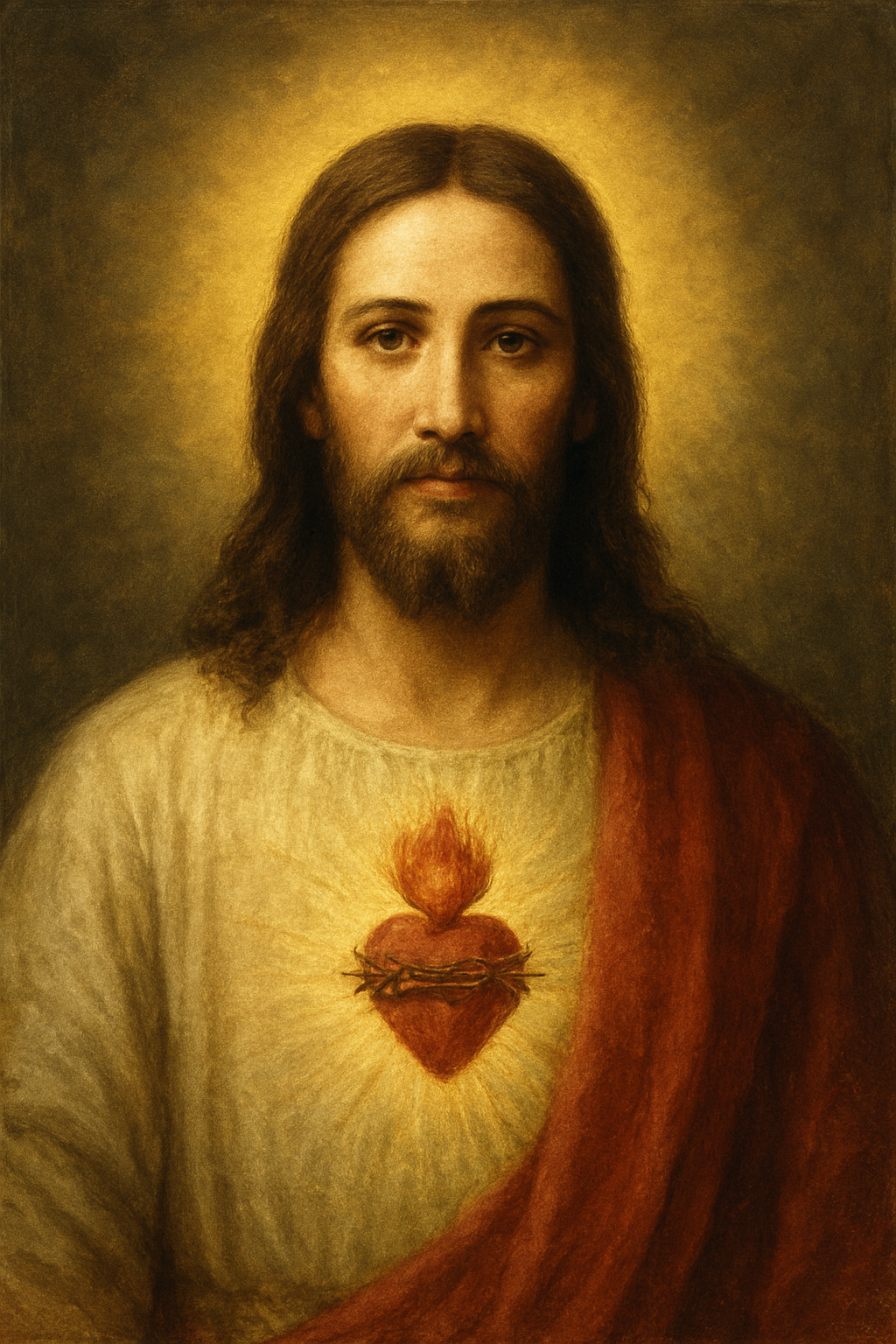
But above all, Adam points us to the One who would come after him: the Second Adam,
Christ — who does not fall asleep in failure, but lays down His life in victory.
In Adam we see our beginning, but in Christ we see our new beginning. Adam shows us
our need; Christ shows us our hope. Adam reminds us of death; Christ brings us to life.
The journey of this book begins here: with Adam, the first man, whose shadow stretches
across all humanity. Yet that shadow prepares us for the greater Light — Christ, the
Second Adam, in whom all things are restored.